This is our system, from the app on my phone, at 10:32 in the morning on April 6, 2021. A sunny spring day. That dark you see on the right side is from the shade of a silver maple tree on that corner, which we do not want to remove, as it provides critical shade for our animals in the summer. By midday, the angle of the sun has changed enough that its no longer an issue.

Way back when I was about 20, I attended a few “alternative” building and energy lectures while I was at San Jose State. I probably still have a brochure on “rammed earth” building somewhere (and still have a deep interest in earthship building techniques (we’ve visited the ones in Taos New Mexico twice). But every time I looked at the price, there was just no way I could afford to go “off grid”.

With the advent of net metering, where the consumer installs a power generating system that is hooked into the electric grid, things started to seem more realistic. You don’t have to install a system that meets all of your needs all of the time, including banks of batteries. Instead, your system feeds back into the existing electrical grid. When you generate power, you get paid by your power company for that electricity, and if you are producing more than you need, someone else can use it. If your system doesn’t meet all of your needs, you’re not left hanging with no power.

Read the rest of this entry »
So, in 2019, I decided to put on my big girl panties and hire actual part-time help in the fall. You know, not paying someone “under the table in cash” but actually run payroll. Our business is small, and our gross revenues are under $50,000, but there’s only so much of me to go around. I’ve also reached a point where I can’t increase that gross revenue unless I have more help to grow and make more product.

Because I’m a control freak and like to understand my business from the ground up, I decided that to start, I’d do the paperwork around officially hiring an employee myself. I wanted to understand what percentage of money was going out in addition to what was going to the employee’s hourly wage, and where it was going as well. And because I only wanted to hire someone for about 10 hours a week it seemed ridiculous to hire a bookkeeper for what amounted to about $550 a month in payroll.

Read the rest of this entry »
Pregnant ewes from a few years ago.

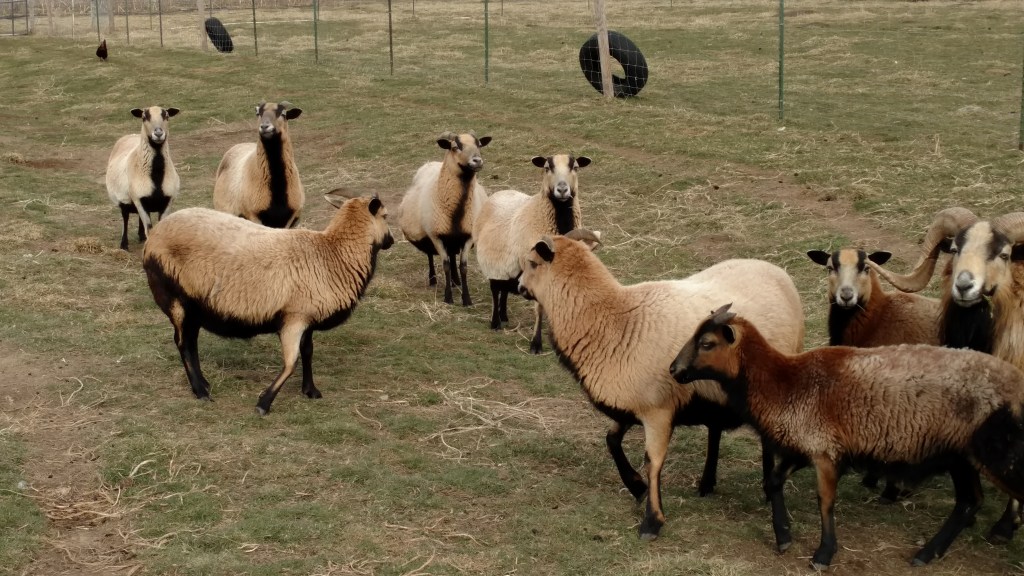
One of the reasons we raise American Blackbelly (ABB) sheep is because they are so easy during lambing season. They tend to give birth during the day, and rarely need assistance. We’ve lost one ewe to a very large baby she was too small to birth, and helped pull one lamb last year, that didn’t need much help other than a tug (we only intervened because the baby had been partially out for about 30 minutes). And that’s in all the births we’ve had starting in 2013. Probably several hundred lambs in going on 9 years.

We do, occasionally, end up with a bottle baby. It’s often to lambs born early in the season, when its still cold. I always think mama looks around and thinks, “There’s no grass. I can’t feed two of these.” I don’t think we’ve ever had a ewe outright reject a lamb when they only had a single baby in 9 years. And we do always wonder if mama doesn’t know something we don’t, in terms of the long term health of the lamb, when she rejects one of them.

One of this year’s bottle babies.

When this first happened, I scrambled to learn how to feed these little guys. Stories abounded of people keeping lambs in the house in dog crates and feeding ever 3 hours in the middle of the night. The lamb is completely imprinted on humans and the human is exhausted with the feeding schedule. But these were standard Suffolk or Dorper lambs. The ones people often say are just “trying” to die for the first few weeks. Blackbellys are stronger than that. They have been bred to survive, not “saved by human intervention” for hundreds of generations.

So I came up with my own system specific to bottle feed to this breed. And I’ve just realized I’ve never really written about it. It’s time to remedy that.

Read the rest of this entry »
Image by silviarita from Pixabay

So, not surprisingly, coming out of 9 months of covid lockdown in 2020, where I decided I needed comfort, and that meant baking ALL OF THE THINGS, including sourdough bread in the spring and cakes and cookies for the holidays, my weight has ballooned to almost 140 lbs. Menopause and a drastically slowed metabolism didn’t help. More important than the increased weight, I felt like garbage. (My ideal weight is somewhere between 115 and 125 lbs). I’ll write more on this particular weight loss journey in a future post (I’m down to the 133-134 range in about 4 weeks. I’ve got a ways to go, but what I’m doing IS working).

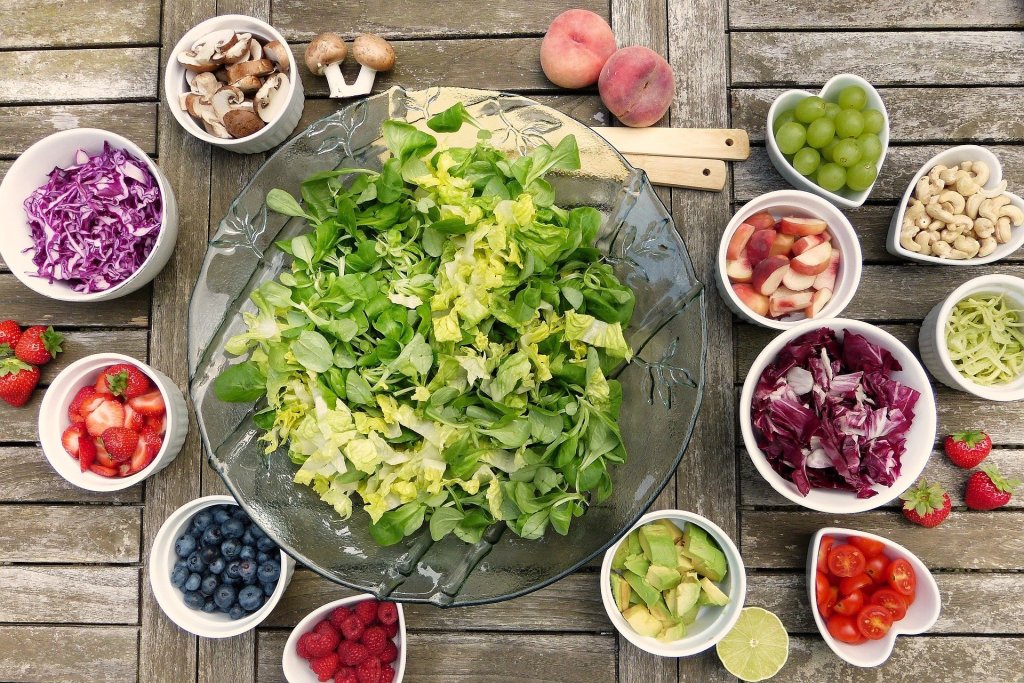
As part of this weight loss journey, I belong to a Whole30 group on Facebook, mostly for recipe inspiration. (You can read about my Whole30 experience here.) And I’m regularly astounded at how many people don’t know how to make a simple salad dressing. Endless pictures of bottled salad dressing labels with questions of “Is this compliant?”, along with complaints that the Whole30 compliant brands (Primal Kitchen and Tessemae’s) just aren’t all that tasty, leave me shaking my head. Vinegar, oil, herbs and spices, perhaps a bit of mustard. Its actually quite simple to make a salad dressing.

Read the rest of this entry »

As we welcome the new year, and plan for the new gardening season, its time to get back to my series on garden plant families. If you look back through the posts, you’ll find we’ve already covered the mints, the brassicas, the nightshades and the alliums (the series is also listed under “gardening” on the DIY Homesteading tab above).

The Apiaceae (which translates to celery family), or in old school terminology, the Umbelliferae (named for the shape of the seed head in this family, which resembles an umbrella), includes carrots, celery, celeriac, parsnips, and many of our commonly used herbs, including parsley, cilantro/coriander, dill, cumin, anise, fennel, caraway, chervil and lovage. Which is a good indication that the plants in this family are often aromatic. This family also includes the famous deadly poisonous hemlock and water hemlock, so this is one you want to be 100% sure of your identification on if you are out foraging.

Read the rest of this entry »

In July 2019, I wrote a blog post titled “Myths of the Gardening World“. In my head, I titled it “Gardening Myths I wish would die”, lol. And almost as soon as it was done, I thought of a few more that I had missed. These are myths I used to believe myself, until I did more research. So here, for your December dreaming of spring enjoyment, are a few additional gardening myths that need to be debunked.

Read the rest of this entry »

You’ve probably heard the statistics or seen the memes. Something on the order of 40% of all food grown in the United States is wasted either before it reaches grocery shelves, or (mostly) after it is purchased. And stories early in the pandemic of farmers dumping milk or slaughtering animals that could not be processed, because the “get big and get out” global food system was an epic failure during a pandemic was enough to turn your stomach. Tight margins and a lack of the right infrastructure and storage when the school and restaurant sales suddenly dried up meant that a huge amount of food was wasted. The cracks in our national food system were exposed. Meanwhile, even before Covid-19, 1 in 7 people in this country are food insecure.

National Resources Defense Council Infographic
Read the rest of this entry »
Fall garlic planting

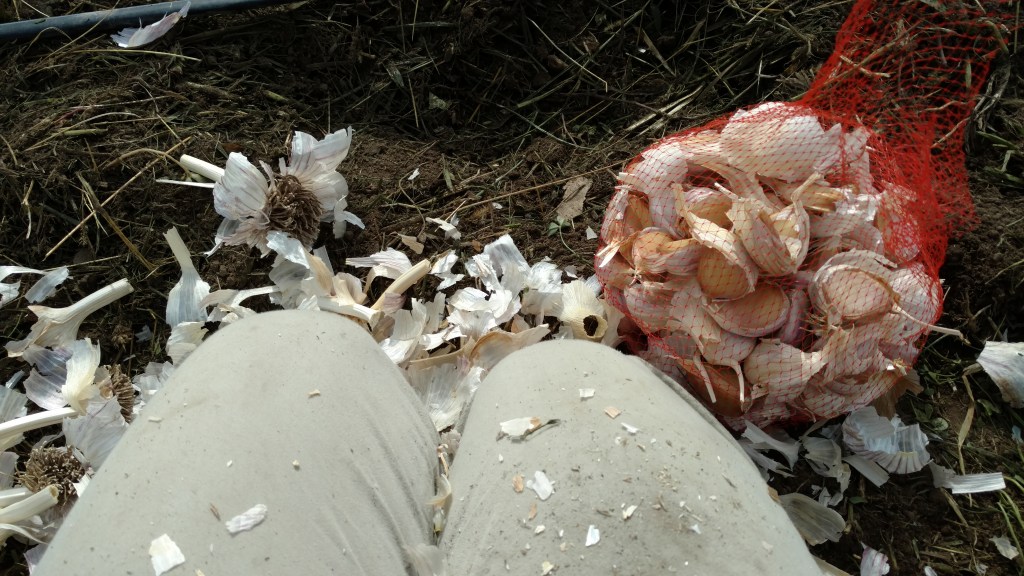
We recently got the garlic in the ground. All 600 feet of it – close to 900 cloves. Shout out to my husband for his help! Putting the garlic in the ground always feels like putting the garden to bed at the end of the season. We had our first hard frost on October 21st, and have since gotten down to 19 degrees here (we tend to run about 5 degrees colder than in town). I’m STILL processing peppers, and have a few cauliflower still out there under cover, but for the most part, the 2020 gardening year is “put a fork in it” done. (More wrap up in a separate blog post).

So now is a good time to get back to myd series on garden plant families. If you look back through the posts, you’ll find we’ve already covered the mints, the brassicas and the nightshades (the series is also listed under “gardening” on the DIY homesteading tab above). What better time to discuss the allium family – garlic, onions, scallions, shallots, leeks, chives – than as we wrap up the fall harvest.

Read the rest of this entry »
This year’s harvest.

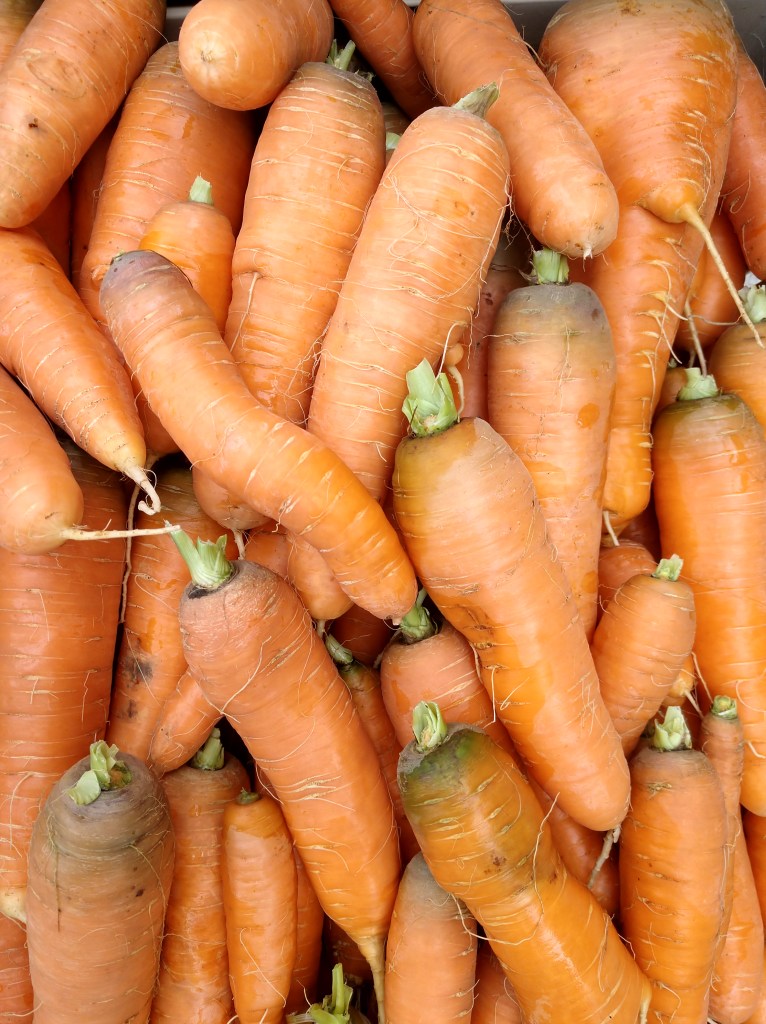
Carrots are one of the first things beginning gardeners want to plant. Nothing says garden success like a handful of carrots pulled fresh from the ground, dirt still clinging to their orange roots! And if you look at gardening books, you learn that carrots are a cool season crop, meaning they can take a frost. And so gardeners are encouraged to plant carrots up to 4 weeks before your last frost. Around here, that would mean early April.

But carrots are also one of the vegetables most beginning gardeners have a hard time with. I don’t know how many times I’ve talked gardening with friends, and they have said, “I planted carrots. But they never came up.” I wrote a whole blog post way back in 2012 on how I used to plant carrots. It was all about doing a scatter method for seeding, and keeping the seeds damp using burlap. This is a great method for raised bed gardening.

Read the rest of this entry »

My husband and I met doing bird field work in the Coconino and Apache Sitgreaves National Forest in Arizona. This job involved being up and ready to go at 4:30 am every morning for an entire summer (we worked 12 days on/2 days off) while camping. If there’s one thing we KNOW how to do, its camp.

Bull Lake near Troy Montana. A truly lovely place.
Read the rest of this entry »

Jennifer Kleffner

Follow the Farm On Instagram

Instagram

Enter your email address to subscribe to this blog and receive notifications of new posts by email.

Join 1,285 other subscribers